

 中心简介
中心简介 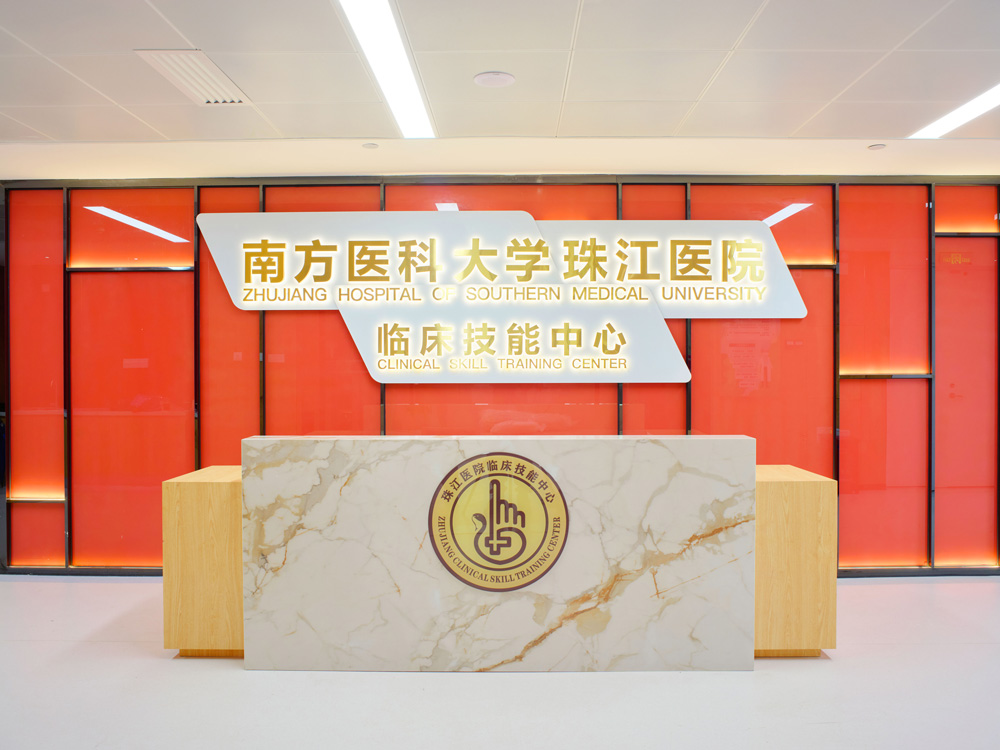
Introduction of Clinical Skills Training Center
I. General Information
The Clinical Skills Center of Zhujiang Hospital, Southern Medical University (the Second Clinical Medical College), was established in 2006, with an initial floor area of approximately 2,500 square meters. At the end of 2022, a new center located on Floors 4–8 of the Second Clinical Medical College Building was completed and officially put into use, expanding the total floor area to 4,800 square meters.The Center is currently equipped with more than 1,500 simulation models and training devices, with a total equipment value exceeding RMB 110 million. Among these, information-based and digital equipment accounts for RMB 18.6 million. The Center primarily undertakes education, training, assessment, and competitions for learners at multiple levels, including undergraduate students, residents, specialty trainees, and clinical healthcare professionals. In addition, it actively engages in public health education, science popularization, and community services.On average, the Center delivers approximately 450,000 person-hours of training, 300,000 person-hours of assessment, and 570,000 person-hours of science popularization activities annually. To date, the cumulative number of training and assessment person-hours has reached 2.2 million. Through years of continuous development and capacity building, the Center has become one of the leading clinical skills training bases in China.
Mission:Innovating medical simulation, enhancing healthcarequality,safeguarding patient safety.
Vission:To be the World-class Simulation Medical Center with Chinesecharacteristic.
Attitude:Accountability in all actions; responsiveness toall matters; resolution for all issues.
II. Platform Construction
The Center is designed with a "Rainbow" theme and comprises seven major platforms:
※ 4th Floor: Integrated Trauma and Emergency Skills Training Platform Features the Pre-hospital Emergency Care Training Center (AR Integrated Simulation Training Center), Simulated ICU, Simulated Chest Pain and Stroke Center, Simulated Operating Room, Surgical Robot Training Center, and Smart Classrooms.
※ 5th Floor: OSCE Assessment Platform Includes candidate waiting areas, a central control room, and standard examination stations. It has developed the world-leading Unmanned Examination System and 5G Multi-modal Proctoring Robots.
※ 6th Floor: Specialized Technical Training Platform Consists of training centers for Comprehensive Laparoscopy, Arthroscopy, Urology Endoscopy, Hysteroscopy, Gastrointestinal Endoscopy, Bronchoscopy, and Microsurgical Techniques.
※ 7th Floor: Maternal and Child Simulation Training Platform & Ultrasound Simulation Training Platform.
※ 8th Floor: Comprehensive Training, Assessment, and Competition Platform.
※ The National First Institute of Medical Simulation.
The Institute of Medical Simulation covers three core sectors: Simulated Healthcare, Simulation Education, and Simulation Translation. The four key development platforms include:Simulation Faculty Training Platform,Simulation Resource Sharing Platform,Simulation Data Analysis Platform and Simulation Industry-Education Integration Platform.
III. Hardware and Software Configuration
The Center is equipped with a comprehensive range of high-, mid-, and low-end devices tailored for educational training. Key equipment includes:High-End Intelligent Patient Simulators(A full series of advanced simulators including Adult, Obstetric, Adult Cardio-cerebrovascular Intervention, Pediatric, Neonatal, and Preterm Infant models),
Virtual Reality (VR) Simulators(Virtual Laparoscopy, Arthroscopy, Urology Endoscopy, and Gastrointestinal Endoscopy systems),Specialized Training Systems(ZEISS High-Definition Microscopes, Bronchoscopy simulators, Ultrasound training systems, and Interventional training systems).
Organized by specialty-based functional zones, the Center has established a networked and intelligent management system that enables online remote teaching and integrated digital management. Relying on the hospital’s overall information infrastructure, the Center has built a dedicated local area network based on the gigabit campus network of Southern Medical University. A three-tier network architecture, combined with a centralized network management system, has been adopted to enhance network security, stability, and risk prevention.The local area network provides full wireless coverage across the Center. Wireless channels are scientifically planned in both horizontal and vertical dimensions to reduce co-channel interference and enable seamless roaming. Network bandwidth is designed to meet the demands of remote teaching and blended online–offline education, with gigabit connectivity to end-user terminals and 10-gigabit connectivity to each floor.On this stable network infrastructure, the Center has deployed an intelligent management platform, a multi-functional OSCE assessment platform, a general clinical skills training platform, and specialty-specific technical training platforms. Advanced information technologies are fully integrated, supported by dedicated resource databases and system servers. Key components include:
1.Highly Interactive Training Platform
Designed to address the limitations of traditional “crowded observation” teaching models, this platform breaks spatial barriers and enables highly interactive skills training across different locations.
2.Smart Education Platform
This platform incorporates VR technologies to establish VR cloud classrooms; desktop virtualization technologies to create next-generation multimedia classrooms; AI-based recognition technologies and wireless screen-sharing to develop multifunctional smart classrooms; and 3D fusion projection technologies to build a virtual trauma simulation platform, enabling immersive medical simulation-based training.
3.Recording and Feedback Platform
Two of the most widely used international scenario-based simulation recording systems—SimCapture and LearningSpace—are employed to support simulation training, fostering learners’ clinical reasoning skills and team collaboration capabilities through structured review and feedback.
4.Intelligent Assessment Platform
An innovative “unmanned examination” model has been developed to optimize integrated assessment workflows. This platform supports formative assessment and personalized feedback while significantly reducing manpower and resource requirements.
5.Multimodal Remote Teaching Platform
Based on a 5G-enabled multimodal VR training system, this platform supports live remote broadcasting of simulation-based teaching and delivers an immersive, multi-angle learning experience without blind spots, while simultaneously building a comprehensive digital teaching resource repository.
IV. Faculty and Staff
The Center maintains a stable and well-structured experimental and simulation-based teaching team that adequately meets its educational and training needs. As of April 2025, the number of full-time faculty members has expanded from the initial two to nearly 20, including 14 faculty members in the primary academic track. Among them are 7 faculty members with doctoral degrees and 7 with master’s degrees. Several faculty members have undertaken visiting scholar or professional training programs at internationally renowned institutions, including the ILUMENS Center of Université Paris Descartes (France), the WISER Simulation Center at the University of Pittsburgh (USA), the Gordon Center for Research in Medical Education at the University of Miami (USA),Stavanger Acute Medicine Foundation for Education and Research in Norway, and Hong Kong Polytechnic University.To maximize interdisciplinary collaboration and synergistic effects, the Center has established both specialty-based teams and functional teams, including Internal Medicine, Surgery, Women’s and Pediatric Medicine, Emergency–Anesthesia–Critical Care, and Nursing teams, as well as Quality Control, Research, Digital and Intelligent Curriculum Development, Information Technology, Media Production, Publicity, Residency Training, and Student Organization Advisory teams. This organizational structure ensures the effective and coordinated implementation of all Center activities.In addition, faculty members of the Center serve as instructors or course directors for a variety of internationally recognized training programs. These include one Prehospital Trauma Life Support (PHTLS) instructor, one Advanced Life Support in Obstetrics (ALSO) course director instructor, and one American Heart Association (AHA) course director, along with 13 AHA-certified instructors.
V. Teaching and Training
(I) Undergraduate Education
1. Program Overview
The center undertakes a significant teaching load throughout the year. It is responsible for delivering the "Clinical Skills" course to undergraduate students from the Second Clinical Medical School, encompassing the five-year program in Clinical Medicine (Mandarin Class 1, Mandarin Class 2, Bilingual Class, and Pediatrics Class), as well as students from the School of Public Health majoring in Psychiatric Medicine. Additionally, it teaches "Pediatric Clinical Skills" to students majoring in Pediatrics. The center also conducts Clinical Skills Modules 1 through 5 for the Clinical Medicine (Excellence and Innovation Class) students. Annually, the center teaches over 500 students, with the average annual teaching contact hours exceeding 80,000. Beyond the core curriculum, the center has developed popular elective courses such as "5-Minute Scenario-Based Critical Incident Management" and "The Art of Doctor-Patient Communication," which have been widely well-received by students.
2. Curriculum Development
Leveraging emerging educational technologies, the center has developed a series of online open courses. These include the Guangdong Province Online Open Courses "Clinical Skills" and "Surgical High-Tech," which have been launched on platforms like Chinese University MOOC and Zhihuishu. Among these, "Surgical High-Tech" and "Clinical Skills" have been recognized as National-Level First-Class Course (Online) and Provincial-Level First-Class Course, respectively. As of October 2025, the cumulative enrollment for "Clinical Skills" and "Surgical High-Tech" has exceeded 47,970 and 20,765 participants, respectively.
Since 2024, the center has initiated digital-intelligent curriculum development. This approach deeply integrates digital resources with artificial intelligence to connect online and offline classrooms, making the mastery of "Clinical Skills" systematic, networked, and multi-dimensional. Student assessment is linked to online learning, combining personalized learning with unified management to achieve a full-cycle, intelligent educational ecosystem. By 2025, the center independently produced over 100 clinical skill operational theory and procedural videos, accompanied by more than 140,000 words of theoretical knowledge covering anatomy, physiology, pathology, and clinical applications. Building on this foundation, the center established a joint studio with ChaoXing to optimize the digital and intelligent management platform for clinical skills learning. The project has resulted in the creation of 143 knowledge graphs with over 2,000 knowledge tags, the identification of 60+ key and difficult points, and the establishment of a pre-class, in-class, and post-class learning chain, leading to the publication of a digital-intelligent clinical practice tutorial. By analyzing student profiles and learning patterns to grasp key and difficult content, the platform enables pre-class learning advancement, intelligent in-class demonstration and learning, and integrated post-class assessment and feedback management. It records and analyzes the entire learning and practice process for each student, precisely matching learning progress with outcomes, and generating intelligent teaching resources for guidance. Students can track their learning progress in real-time, while instructors can provide feedback on teaching effectiveness. Currently, the digital course platform has recorded over 188,000 course activities and 1.98 million course visits on the Learning Pass platform.
3. Teaching Reform
The team actively engages in teaching reform and has secured over 30 teaching projects at various levels, including the Guangdong Province Quality Engineering Project and Guangdong Province Online Open Courses. Notable projects include the Guangdong Province Quality Engineering Construction Project "Clinical Skills Training Core Teaching Team" and "Medical Simulation Experimental Teaching Demonstration Center"; the recognition of the Guangdong Province 2020 Curriculum Ideology and Politics Construction Reform Demonstration Project (Curriculum Ideology and Politics Demonstration Course) and the 2021 Curriculum Ideology and Politics Demonstration Team (Clinical Skills Teaching Team); the Guangdong Province Curriculum Ideology and Politics Demonstration Project "Internalizing in Heart, Externalizing in Action: A Case Study of Curriculum Ideology and Politics Construction in 'Surgery'"; the Guangdong Province Professional Degree Postgraduate Teaching Case Library Construction Project; the Guangdong Province Postgraduate Education Innovation Plan Project "Postgraduate Demonstration Course Construction for 'Clinical Skills'"; and the Southern Medical University Education and Teaching Reform Project "Exploration and Practice of Integrating Curriculum Ideology and Politics into Surgery Teaching". The team has published over 30 teaching articles and received more than 40 teaching honors. These include the Southern Guangdong Excellent Teacher Award, Southern Medical University Teaching Master Award, Second Prize in the Second Guangdong Province Teacher Teaching Innovation Competition, Second Prize in the Third Batch of Undergraduate Online Teaching Excellent Cases (Course Category) during the epidemic phase from the Guangdong Province Undergraduate Online Open Courses Steering Committee, First Prize for "Teaching Innovation Excellent Case" from the Guangdong Province Online Open Courses Steering Committee, First Prize in the 2021 Southern Medical University Education and Teaching Achievement Award, Second-Class Award of the 2025 Guangdong Provincial Graduate Education Teaching Achievement Awards,First Prize in the 2025 Southern Medical University Postgraduate Teaching Achievement Award, and First Prize in the 13th National Hospital Management Tools Conference.
4. Student Associations
In 2020, under the overall guidance of Director Tian Jing and with the participation of center faculty as advisors, the Southern Medical University "Applying Medical Knowledge" University Student Clinical Innovation and Practice Association was established. The association comprises four departments: Emergency Care & Science Popularization, Clinical Skills Training, PBL & Scientific Research, and Standardized Patient Training, each conducting a wide range of activities.
(1) Emergency Care & Science Popularization Department
This department is primarily composed of medical student leaders and includes divisions for administration, training, science popularization, and publicity to manage all departmental affairs comprehensively. It also oversees the Southern Medical University "First Aid for All" University Student Volunteer Service Team. Originally established in 2016, the service team adheres to the principle of "Seizing the Golden Four Minutes, Enhancing Public Rescue Capabilities." It employs an innovative three-tier training model and focuses its activities in fixed locations such as schools, enterprises, communities, and towns. Through regular volunteer services, holiday volunteer programs, and university alliance activities, it extensively provides emergency care training, science popularization, and one-on-one emergency response plan development at the grassroots level. Over seven years of operation, the team has benefited nearly a million people and received over 20 honors, awards, and project grants, including:
Silver Award at the 1st National Health Industry Youth Volunteer Service Public Welfare Entrepreneurship Competition (2025)
Bronze Award at the 9th China International "Internet+" University Student Innovation and Entrepreneurship Competition (2024)
Bronze Award at the China International University Student Innovation Competition (2023)
Silver Award for Outstanding Project at the 6th China Youth Volunteer Service Project Competition (2022)
Gold Award in the Red Tourism Track of the Guangdong Provincial "Internet+" Competition (6th and 8th editions), Silver Award (7th edition)
Winning Prize and Third Prize in the "Create Guangdong" Competition
Silver Award in the "Zhongchuang Cup"
Bronze Award at the "Chuangqingchun" China Youth Innovation and Entrepreneurship Project Competition (2021)
Key Cultivation Project in the Guangdong Provincial "Yimiao Plan" (2021), Continuous Support Project (2022)
Second Prize in the Guangzhou Youth Volunteer Service Special Action Boutique Project Competition (2021)
Outstanding Team in the National University Student Summer Social Practice Special Activity "Dedicating to Rural Revitalization, Assisting Healthy China" (2021)
Outstanding Team Award in the Guangdong Provincial College Student Summer "Sanxiaxiang" Social Practice Activity (2020)
Innovation Award in the 10th "Win in Guangzhou" and Guangdong-Hong Kong-Macao Greater Bay Area University Student Entrepreneurship Competition (2021)
Outstanding Team in the National University Student Summer "Sanxiaxiang" Social Practice Activity (2022)
Outstanding Volunteer Service Collective in Haizhu District, Guangzhou (2016-2017)
(2) Clinical Skills Training Department
This department focuses on stimulating student interest and aligns with the China University Student Medical Technology Skills Competition. It primarily trains students in fundamental skills of internal medicine, surgery, gynecology, pediatrics, and nursing to consolidate professional knowledge and build a bridge to clinical work. It also serves as a platform for selecting and comprehensively preparing students for clinical skills competitions, aiming to promote learning through competition and teaching through learning, thereby enhancing students' enthusiasm for learning and improving their clinical skill levels. To date, it has guided students to achieve one Special Prize, three First Prizes in the South China Division, and one First Prize, one Silver Award, and two Second Prizes in the National Finals.
(3) PBL & Research Department
Since 2006, the center innovatively launched in-class PBL competitions and extracurricular PBL interest groups, which later evolved into the PBL & Research Department after the association's establishment. On one hand, the department encourages students to participate in extracurricular PBL teaching activities. Its flagship event, the annual "PBL Case Teaching Competition," has been successfully held for 17 consecutive years. On the other hand, leveraging the research expertise of full-time faculty from the Clinical Skills Center and the Surgery Teaching and Research Office, the department organizes academically capable students to engage in research. This has significantly enhanced students' capabilities in research design, paper writing, teamwork, and presentation skills. To date, the department has guided undergraduate students to publish 12 SCI-indexed papers as first authors and over 90 Chinese-language papers. Participants have won 9 provincial-level honors in the "Challenge Cup" competition. In 2022, under the department's guidance, undergraduates won the "Beautiful Image Award" and the "Excellence Award" at the First Medical Virtual Simulation Experiment Innovation Competition. Dozens of students from the PBL group have been recommended for postgraduate studies at prestigious institutions such as Peking Union Medical College, Fudan University, and Shanghai Jiao Tong University through exemption programs.
(4) Standardized Patient Training Department
In the clinical skills teaching process, the department trains and utilizes student Standardized Patients (SPs). This approach guides medical students to think from the patient's perspective, fostering a deeper understanding of doctor-patient communication and the essence of humanistic care. Role-playing is used to promote holistic development in knowledge, skills, and humanistic qualities. Signature activities include SP training sessions, online SP relay activities, SP makeup courses (teaching how to simulate disease appearances), and SP script competitions.
(II) Residency Training
1. Progressive Tiered Training
Based on the current status of residency standardized training at our base, we explore a discipline-specific progressive tiered training model. The framework is designed as follows: first-year residents focus on building a solid clinical foundation, mastering basic clinical skills in surgery, internal medicine, emergency care, and nursing, while developing physician-patient communication skills, patient safety awareness, and humanistic care competencies; second-year residents intensify clinical thinking training, enabling them to make correct clinical decisions based on actual cases; third-year residents advance to specialized technical training and comprehensive ability cultivation, allowing them to flexibly integrate and apply acquired knowledge in team collaboration and comprehensive patient management. This progressive approach aims to better prepare trainees for undertaking specialist responsibilities and excelling in clinical roles after graduation. Consequently, our center has been selected as one of the 13 pilot bases for the three-stage training program endorsed by the Chinese Medical Doctor Association.
2. Implementation Outcomes
Building upon the above work, Professor Tian Jin contributed to leading the development of the "Work Guide for Clinical Skills Training Centers in Standardized Residency Training Bases (2023 Edition)" (simulation training section). The center developed a basic arthroscopy skills training box for enhancing residents' technical skills. Our hospital has become a core participating unit in the National Medical Examination Center's Simulation and Virtual Technology Empirical Research Project, leading 14 sub-projects (spearheading cardiovascular intervention technology and urological endoscopy technology). The skills center is tasked with organizing national examiner training and formulating assessment standards for this project. Empirical research findings on arthroscopy and hysteroscopy have been published in journals such as Arthroscopy, Journal of Surgical Education, Annals of Medicine, Surgical Innovation, and China Medical Education Technology. Our residents have achieved outstanding results in various national and provincial clinical skills competitions, including the Grand Prize in the 2024 Digestive System Clinical Competence Competition of the National Alliance of Medical Graduate Schools, the Team Grand Prize in the 2019 Ophthalmology Clinical Ability Competition, the Team First Prize in the 2019 Guangdong Provincial Residency Standardized Training Clinical Skills Competition, and the Team First Prize in the 2020 Guangdong Provincial Residency Standardized Training Clinical Skills Competition for Obstetrics, Gynecology, and Pediatrics. The center has hosted and organized large-scale residency competitions and assessments, such as the residency practical skills graduation examination and clinical competency contests. It served as the inaugural host for the Chinese Medical Doctor Association's Teaching Competence Competition for Instructors in Residency Standardized Training, with online viewership exceeding 2.3 million. As the chief judge unit for the operational skills teaching track, the center led the development of simulation-based demonstration teaching standards for operational skills and pioneered a student-centered interactive teaching format, thereby advancing the development of simulation-based teaching faculty nationally. Directors and faculty members, including Professor Tian Jin, Xiao Yao, and Qian Dandan, have been invited to present academic reports at the Residency Standardized Training Summit Forum organized by the Chinese Medical Doctor Association.
(III) Specialist Training
The center maintains close collaboration with clinical departments. Under the leadership of department heads and with the active participation of teaching faculty, the teaching team has expanded significantly, growing from an initial 10 members to over 50, forming a team characterized by the combination of full-time and part-time staff and the linkage of "Dual-Qualified" instructors (possessing both teaching proficiency and clinical expertise). Through the joint efforts of full-time and clinical teachers, the center has pioneered the establishment of 24 specialist technical colleges. These colleges cover various disciplines, including Microscopy, Ultrasound, Interventional Techniques, Endoscopy, Critical Care, Obstetrics & Gynecology, Pediatrics, Orthopedics, Urology, and more. The center conducts various specialized technical training workshops, such as the Aneurysm Interventional Simulation Workshop, Atrial Fibrillation Interventional Simulation Workshop, Hysteroscopy Simulation Workshop, Advanced Obstetrics Workshop, and Perioperative Hemodynamics Workshop, all of which have been successfully run for multiple sessions and have received positive feedback from trainees within and outside the province.
Furthermore, the center has developed 145 training courses categorized into 6 major domains (Management, Assessment & Competitions, Informatization, Teaching Methods, Residency Training, Specialist Techniques). It also runs 7 internationally certified courses accredited by the American Heart Association (AHA) and the American Academy of Family Physicians (AAFP). As a key training base, the center currently holds over 20 national and provincial training qualifications. These include being a National Specialist Standardized Training Base, a National Health Commission Training Base for Cardiovascular Interventional Diagnosis and Therapy (Coronary Intervention), the South China Minimally Invasive Technique Training Center of the Chinese Medical Association Urological Branch, an Experimental Teaching Center for Emergency and Rehabilitation Skills, a Chinese Medical Doctor Association Laparoscopic Surgeon Training Base, a National Neurosurgery Specialist Training Base, and one of the first batch of Provincial Training Bases for the Surgical Fundamental Skills Improvement Project under the National Health Commission.
On March 8, 2025, the Zhujiang Hospital - Superstar Digital Intelligence Education Joint Laboratory was established in collaboration with the FanYa Superstar Group.
VI. Teaching and Research
The center collaborates with multiple research teams to conduct scientific research focusing on three key areas: intelligent education, mechanism research, and translational application. Collaborative partners include the team of Associate Research Fellows Ding Changhai, Lu Yao, and Cao Peihua from the Zhujiang Hospital Clinical Research Center; the team of Professors Li Yanbing and Li Jianyi from the Basic Medical College of Southern Medical University; and the team of Professors Wang Jixin and Chen Liangying from Central China Normal University.
The Pearl River Medical Simulation Education Industrial Park was established on March 8, 2025, dedicated to building a hub for the integrated development of medical simulation education and technology. Its construction vision is as follows:
1.Establish a National Medical Simulation Research Center.
2.Build a standardized medical simulation education system.
3.Promote the domestic production of medical simulation equipment and bio-simulation materials.
4.Set up a medical simulation industry incubation platform.
5.Formulate clinical specialty technology certification standards.
In December 2025, the Guangzhou Simulation Medicine Zhujiang Industry Association was established with the goal of building a nationally leading and internationally first-class hub for simulation-based medical education. The Association aims to create a complete closed-loop ecosystem of “needs identification–research and development–validation–translation–dissemination,” thereby promoting the industrialization and standardization of simulation medicine education in China.
(I)Research Projects Approved (Selected from the Past 5 Years)
1.National Key Research and Development Program of China – Key Special Project on Engineering Science and Interdisciplinary Integration:Key Technologies and Application Demonstration of Intelligent Cardiopulmonary Hemodynamic Simulation and Gas Exchange Modeling.
2.National Center for Medical Education Development Medical Simulation Education Research Project: Research on the Effect of Mindfulness-Based Cognitive Training in Promoting the Transfer Validity of Endoscopic Skills
3.National Center for Medical Education Development Medical Simulation Education Research Project: Application of Simulation-Based Deliberate Practice in Neonatal Resuscitation Single Skill Training: A Multicenter Study
4.Guangdong Province Quality Engineering Project: Medical Simulation Experimental Teaching Demonstration Center
5.Guangdong Association of Higher Education "14th Five-Year Plan" 2021 Higher Education Research Project (General Topic): Research on Online Teaching Models and Effectiveness Evaluation in Medical Colleges in the Post-Pandemic Era
6.Guangdong Province 2022 Education Science Project: Construction of a Simulation Teaching Case Repository for "Clinical Skills"
7.Guangdong Province Undergraduate Online Open Courses Steering Committee: "AI + Online Open Courses" Creating a New Ecosystem for Smart Education
8.Virtual Simulation Experiment Teaching Innovation Alliance, Virtual Teaching and Research Section for Clinical Skills
9.Guangdong Province Hospital Association 2021 Medical Alliance Construction and Management Research Project: Exploration of a Homogeneous Construction Model for Medical Simulation Training Centers within County Medical Communities in Tight-Knit Medical Alliances
10.Ministry of Education 2022 Second Batch Industry-Academia Cooperation Project: Exploration and Practice of Online-Offline Blended Teaching Mode for "Clinical Skills" in the Context of "New Medical Science"
11.Ministry of Education 2022 Second Batch Industry-Academia Cooperation Project: Research and Practice on Improving Clinical Teaching Faculty Competency Based on Remote Workshop Mode
12.Southern Medical University Teaching Reform Project: Ideological and Political Education Reform and Practice in the Experimental Course "Clinical Skills Module III"
13.Industry-Academia Collaboration Horizontal Project: Research on the Construction of a Clinical Skills Video Library and Design of an Evaluation System Based on an Unmanned Examination and Assessment System
14.Industry-Academia Collaboration Horizontal Project: Research on Teaching Strategies and Evaluation Methods for Laparoscopic Surgery Training Using Animal Isolated Organs
15.Industry-Academia Collaboration Horizontal Project: Empirical Research on a High-Fidelity VR-Based Simulation Training System for Foraminoscopic Surgery
16.Industry-Academia Collaboration Horizontal Project: Research on Teaching Strategy Design and Evaluation Methods for Simulation Training in Laparoscopic Appendectomy
17.Industry-Academia Collaboration Horizontal Project: Research on Teaching Strategies and Evaluation Methods for Simulation Training in Arthroscopic Anterior Cruciate Ligament Reconstruction
18.Industry-Academia Collaboration Horizontal Project: Exploration of Teaching Strategies and Research on Evaluation Metrics for Emergency Department Training Using the High-Fidelity Simulation Robot MISE Medical Simulation Teaching System
19.Industry-Academia Collaboration Horizontal Project: Research on the Fidelity Evaluation of 3D-Printed Artificial Organs Based on Biomimetic Materials and Their Application in Skills Training
20.Industry-Academia Collaboration Horizontal Project: Research on Intelligent Evaluation of Cardiopulmonary Resuscitation Based on an Unmanned Examination and Assessment System
(II) Published Papers (Selected from the Past 5 Years)
1. Li W, Mo Y, Xie S, Fu L, Ye Y, Zhou Y, Lai J, Wang W, Lu Y, Li G, Tian J. Self-reinforced piezoelectric chip for scaffold-free repair of critical-sized bone defects. Nat Commun. 2025 Jul 1;16(1):5800. doi: 10.1038/s41467-025-61243-w. PMID: 40593819; PMCID: PMC12216264. (JCR Q1, IF=15.7)
2. 2.He L, Li W, Zhang Y, Wang J, Yu Y, Li S, Liu B, Tian J. Academic stress and online learning engagement in medical students: the parallel mediating roles of sleep quality and positive academic emotions. BMC Med Educ. 2025 Dec 7. doi: 10.1186/s12909-025-08369-z. Epub ahead of print. PMID: 41354792.(JCR Q3, IF=3.2)
3. Fu L, Li S, Zou Z, Gan L, He G, Xie L, Tian J, Xiao Y. Prospects for the use of objective assessment indicators of surgical skills in medical education: a twenty-year scoping review. Am J Surg. 2025 Nov;249:116606. doi: 10.1016/j.amjsurg.2025.116606. Epub 2025 Sep 6. PMID: 40957285. (JCR Q2, IF=2.9)
4. Li W, Mo Y, Xie S, Fu L, Ye Y, Zhou Y, Lai J, Wang W, Lu Y, Li G, Tian J. Self-reinforced piezoelectric chip for scaffold-free repair of critical-sized bone defects. Nat Commun. 2025 Jul 1;16(1):5800. doi: 10.1038/s41467-025-61243-w. PMID: 40593819; PMCID: PMC12216264. (JCR Q1, IF=16.6)
5. Li W, Wu S, Xie X, Yang W, Feng L, Yang Z, Xia O, Tian J. Effect of Mindfulness Training on Skill Performance in Simulator-Based Knee Arthroscopy Training for Novice Residents-A Randomized Controlled Study. J Surg Educ. 2024 Dec;81(12):103306. doi: 10.1016/j.jsurg.2024.103306. Epub 2024 Oct 29. PMID: 39471565. (JCR Q3, IF=2.9)
6. Liu J, Li W, Ma R, Lai J, Xiao Y, Ye Y, Li S, Xie X, Tian J. Neuromechanisms of simulation-based arthroscopic skills assessment: a fNIRS study. Surg Endosc. 2024 Nov;38(11):6506-6517. doi: 10.1007/s00464-024-11261-4. Epub 2024 Sep 13. PMID: 39271512. (JCR Q1, IF=3.1)
7. Feng L, Li W, Lai J, Yang W, Wu S, Liu J, Ma R, Lee S, Tian J. Validity of A Novel Simulator for Percutaneous Transforaminal Endoscopic Discectomy. World Neurosurg. 2024 Jul;187:e220-e232. doi: 10.1016/j.wneu.2024.04.070. Epub 2024 Apr 17. PMID: 38641247. (JCR Q4, IF=2.0)
8. Yang W, Li W, Guo C, Wang Z, Wu S, Feng L, Yang Z, Xie X, Tian J. A spaced retraining schedule with 2-day interval improves the acquisition and retention of simulation-based basic arthroscopic skills. Knee Surg Sports Traumatol Arthrosc. 2023 Dec;31(12):5546-5553. doi: 10.1007/s00167-023-07618-2. Epub 2023 Oct 14. PMID: 37837576. (JCR Q1, IF=3.3)
9. Tang H, Mo Y, Li W, Hu H, Chen L, Zhu R, Zhang D, Ouyang P, Wang W, Li G, Tian J. Piezoelectric PDMS/AlN Film for Osteogenesis in Vitro. ACS Biomater Sci Eng. 2023 Jul 10;9(7):4187-4196. doi: 10.1021/acsbiomaterials.3c00196. Epub 2023 Jun 21. PMID: 37341117. (JCR Q2, IF=5.4)
10. Lei F, Yanfang L, Shangxing W, Weihao Y, Wei L, Jing T. Spinal Fusion Versus Repeat Discectomy for Recurrent Lumbar Disc Herniation: A Systematic Review and Meta-Analysis. World Neurosurg. 2023 May;173:126-135.e5. doi: 10.1016/j.wneu.2022.12.091. Epub 2023 Jan 12. PMID: 36640835. (JCR Q4, IF=2.0)
11. Li W, Meng X, Zhang KJ, Yang Z, Feng Z, Tong K, Tian J. Meditation Using a Mobile App Improves Surgery Trainee Performance: A Simulation-Based Randomized Controlled Trial. Arthroscopy. 2023 May;39(5):1262-1270. doi: 10.1016/j.arthro.2022.09.008. Epub 2022 Sep 30. PMID: 36191734. (JCR Q2, IF=3.9)
12. Zhang KJ, Zhou H, Guo H, Li W, Yang Z, Liu R, Qin S, Xie X, Tian J. Learning and Short-Term Retention of Simulation-Based Arthroscopic Skills. J Surg Educ. 2023 Jan;80(1):119-126. doi: 10.1016/j.jsurg.2022.08.020. Epub 2022 Sep 19. PMID: 36137894. (JCR Q3, IF=2.9)
13. Zhou H, Xian C, Zhang KJ, Yang Z, Li W, Tian J. The frequency of assessment tools in arthroscopic training: a systematic review. Ann Med. 2022 Dec;54(1):1646-1656. doi: 10.1080/07853890.2022.2085317. PMID: 35695551; PMCID: PMC9225735. (JCR Q1, IF=5.1)
14. Liao R, Yang Y, Li W, Li Z, Li X, Xiong W, Lin C, Xiao Y, Tian J. Effective Skill Transfer From Fundamentals of Arthroscopic Surgery Training to Shoulder Arthroscopic Simulator in Novices. Surg Innov. 2023 Feb;30(1):103-108. doi: 10.1177/15533506221104379. Epub 2022 May 24. PMID: 35608178. (JCR Q4, IF=1.7)
15. Liao R, Feng Z, Li W, Liu R, Xu X, Yao S, Tian J. Interleukin-1 induces receptor activator of nuclear factor-κB ligand-independent osteoclast differentiation in RAW264.7 cells. Exp Ther Med. 2021 Jun;21(6):640. doi: 10.3892/etm.2021.10072. Epub 2021 Apr 16. PMID: 33968171; PMCID: PMC8097200. (JCR Q4, IF=2.5)
16. Li W, Zhang KJ, Yao S, Xie X, Han W, Xiong WB, Tian J. Simulation-Based Arthroscopic Skills Using a Spaced Retraining Schedule Reduces Short-Term Task Completion Time and Camera Path Length. Arthroscopy. 2020 Nov;36(11):2866-2872. doi: 10.1016/j.arthro.2020.05.040. Epub 2020 Jun 2. PMID: 32502713. (JCR Q2, IF=3.9)
(III) Teaching Materials Contribution
1.Tian Jing (Editor-in-Chief). Available Online, December 2025. Digital-Intelligent Tutorial on Clinical Practical Skills. Shanghai: Fudan University Electronic & Audiovisual Press. (ISBN: 978-7-89407-751-6)
2.Tian Jing (Editor-in-Chief). Simulation Medicine(Second edition). Beijing: People's Medical Publishing House. (National Health Commission Standardized Residency Training Planning Textbook).
3.Tian Jing (Associate Editor). (September 2022). Simulation Medicine. Beijing: People's Medical Publishing House. (National Health Commission Standardized Residency Training Planning Textbook).
4.Tian Jing (Associate Editor).(November 2025). Clinical Practice Skills Learning Manual for Licensed Physicians, People's Medical Publishing House.
5.Xiao Yao (Contributor). (2020). Internal Medicine Clinical Puncture Operation Manual. Beijing: People's Medical Publishing House.
6.Xiao Yao (Contributor). (2019). Xiangya Clinical Skills Training Tutorial (2nd Edition). Beijing: Higher Education Press. ("13th Five-Year" Medical Planning Textbook for Higher Education).
VII. Associations and Alliances
(I) Guangdong Medical Education Association – Medical Simulation Education Professional Committee
At the beginning of 2017, the Medical Simulation Education Professional Committee of the Guangdong Medical Education Association was established, with Professor Tian Jing serving as the Chair. This committee is the first provincial-level professional committee in China dedicated to the research and development of medical simulation education. It covers 86 teaching hospitals across 21 prefecture-level cities in the province and includes 144 experts and scholars in medical simulation education. The committee builds a communication platform for medical simulation education, develops medical simulation teaching standards, standardizes simulation-based teaching requirements, expands international collaboration in medical simulation education, and continuously promotes the healthy development of medical simulation education in China.
From 2017 to 2025, the committee has continuously hosted seven editions of the Zhujiang Development Forum on Simulation in Healthcare Education, with a cumulative participation of nearly six thousand attendees, making it the largest academic event in medical simulation education in China. In 2020, it innovatively launched the “Zhujiang Medical Simulation Education Carnival Series,” adopting an integrated online–offline format, in which the online academic week attracted more than ten thousand viewers.
(II) Guangdong Association of Primary Medicine – Clinical Skills Training Guidance Professional Committee
At the end of 2021, the Clinical Skills Training and Guidance Professional Committee of the Guangdong Primary Healthcare Association was established, with Professor Tian Jing serving as the Chair. The committee aims to promote the standardized and regulated development of clinical skills training in primary healthcare institutions across the province. It integrates clinical skills training into the entire cycle of medical talent development, enhances the comprehensive capabilities of primary healthcare workers, improves medical quality and safety, benefits grassroots populations, and provides new approaches for implementing the “Strengthen Primary Healthcare” policy of the health sector.
Currently, the committee mainly focuses on the development and promotion of specialty technology simulation training courses at the grassroots level, the establishment of demonstration county-level clinical skills training centers, and the development of grassroots simulation medical education faculty. To date, it has provided facility construction guidance for more than 20 institutions within and outside the province.
(III) Zhujiang Healthcare Simulation Education Alliance
In August 2018, seizing the opportunity brought by the development of the Zhujiang Specialty Alliance and within the context of the medical consortium, the center led the establishment of the Zhujiang Healthcare Simulation Education Alliance. The alliance aims to promote in-depth collaboration among member institutions in hands-on simulation training, research development, faculty training, online resource development, and the creation of training systems for various medical specialties. It seeks to enhance the overall level of medical simulation education, explore and provide platforms for advanced learning, share operational management experience of simulation centers, as well as simulation education methodologies and techniques. At the same time, it fully utilizes resources at all levels, engages in close collaboration through multicenter research, and forms a two-way training model of “going out and bringing in,” opening a new pathway for continuing medical education for healthcare professionals.
Over more than six years of rapid development, the alliance now includes 192 member institutions, covering 23 provinces and 91 cities, with 16 governing units.
VIII. Science Popularization Base
In 2022, after a series of evaluation and recognition procedures, the Medical Technology and Skills Science Popularization Base of the Clinical Skills Center was designated as a Guangdong Provincial Science Popularization Education Base and a Guangzhou Science and Technology Popularization Base. The base’s science popularization work adheres to the mission of “explaining science, applying science, and bringing medicine closer to the public,” focusing on comprehensive science education in medical technologies and skills, as well as specialized science education in emergency care skills. Activities held within the base include winter camps, summer camps, and study programs for primary and secondary school students. Participants—mainly middle and high school students from Guangzhou and across the country—are provided with medical technology instruction and hands-on skill experience by the base’s teachers. For example, through the microsurgery science popularization platform, instructors can explain to the public what microsurgical techniques are and the types of surgeries in which they are currently applied, and can also guide participants in practicing basic microsurgical skills during hands-on sessions, such as engraving exercises, gauze suturing, rubber glove suturing, as well as operating a surgical microscope for tasks like fresh-frozen chicken wing artery and vein anastomosis. Throughout the series of science popularization activities, the base fully leverages the advantages of simulation, allowing the public to experience the medical profession up close and appreciate the power of technological advancement. At present, the base has received group visit and study tour reservations from numerous schools in Guangzhou, including Zhixin High School, Guangzhou No. 7 Middle School, Yahetang Primary School, and others. External science popularization efforts focus primarily on the promotion of first aid education, with activity locations spanning various provinces and cities across the country, such as Longsheng Town, Longsheng Various Nationalities Autonomous County, Guilin City, Guangxi Zhuang Autonomous Region; Changliu Village, Liangkoutown, Conghua District, Guangzhou City, Guangdong Province; Fengxi Village, Fengjiang Town, Jiexi County, Jieyang City, Guangdong Province; as well as the Trolleybus Division of Guangzhou Bus Group, Canton Tower, Jinbi Garden, Xiaogang Park, South China Botanical Garden, and the Party-Masses Service Center of Luogang Subdistrict, Huangpu District. Representing the hospital, Xiao Yao and Mao Min won the First Prize in the 2022 Guangdong Health Action Knowledge and Practice Competition (Medical Institutions Division).
IX. Future Development
Zhujiang Clinical Skills Training Center, Southern Medical University, is committed to building a world-class medical simulation center with Chinese characteristics. It seeks to apply and innovate various simulation-based educational methods, integrate educational resources, cultivate simulation teaching faculty, develop standardized simulation training curricula and assessment methods, and conduct standardized training for grassroots physicians, residents, and specialist physicians. By providing clinical skills training for learners of different levels, backgrounds, and needs, the center aims to build a comprehensive clinical skills center with strong faculty capacity, well-equipped facilities, and rational functional divisions—ultimately supplying a large number of outstanding medical professionals to alliance hospitals and institutions nationwide, contributing to improved healthcare quality.
In the future, the center will focus on building three major sections: the International Simulation Medicine Research Center, the International Simulation Medicine Teaching and Research Center, and the International OSCE Intelligent Assessment Demonstration Center, forming a comprehensive development framework that integrates scientific research, teaching, and assessment. Among them, the International Simulation Medicine Research Center will establish a Learning and Cognitive Neuroscience Laboratory, a VR/AR Mixed Reality Laboratory, and a Psychology and Behavioral Science Laboratory to promote theoretical innovation and technological integration in simulation medicine; the International Simulation Medicine Teaching and Research Center (non-procedural skills direction) will construct an Internal Medicine Critical Care Simulation Training Center, a Women and Children Skills Training Center, and an Emergency–Anesthesia–Critical Care Training Center, with the goal of improving systems for clinical reasoning and teamwork training; the International OSCE Intelligent Assessment Demonstration Center will develop an Unmanned Examination Demonstration Center, an Intelligent Machine-Scoring Research and Development Center, and an Intelligent Robotic Proctoring and Remote Evaluation Center to advance the intelligent, objective, and remote assessment of clinical skills.
At the same time, the center will advance the construction of the China Health–Zhujiang International Simulation Medicine Innovation Center, with a planned area of approximately 6,000 square meters. Key development areas will include a large-animal experimental center, an animal surgical center, a surgical robotics training center, a laparoscopic technique training center, a microsurgical technique training center, an interventional technique training center, and an endoscopic technique training center. This facility aims to become a leading minimally invasive simulation training center in China.
(The Clinical Skills Center of Zhujiang Hospital, Propaganda Group,
data as of January 30, 2026)

